Transit architecture is undergoing a fundamental shift. No longer limited to the design of individual stations, it now plays a central role in shaping the entire passenger journey — from first arrival to final destination — while also strengthening the connection between transit systems and the communities they serve.
As agencies prioritize rider experience, accessibility, and long-term value, stations are increasingly being designed as civic assets that support development, generate economic activity, and create more seamless, intuitive mobility networks.
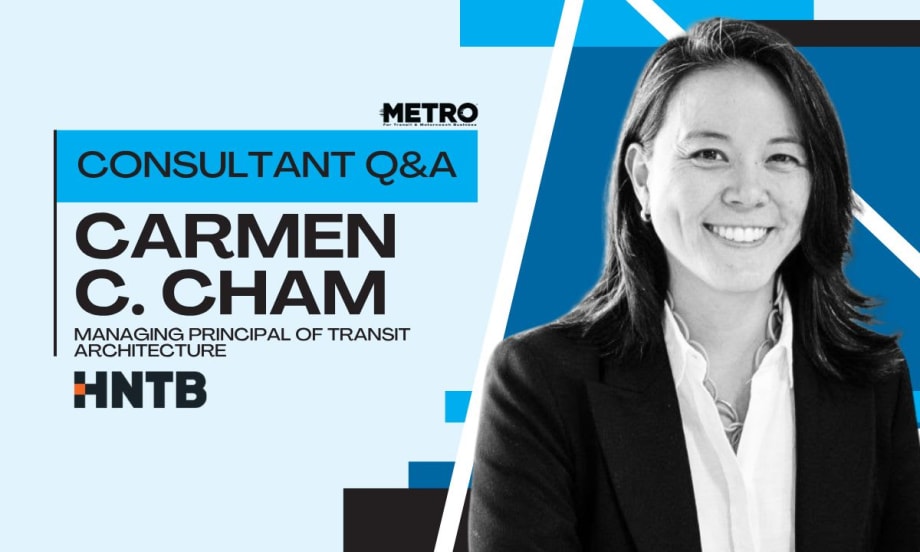
In this consultant roundtable, Carmen C. Cham, managing principal of transit architecture at HNTB, shares insights on how design is evolving to meet these broader expectations, balance operational performance with user experience, and position transit infrastructure for the future.
About Architecture and Design
Q: How has the role of architecture in transit projects evolved in recent years, particularly as agencies focus more on passenger experience and community integration?
Cham: Architecture in transit has expanded well beyond the design of the station itself. Traditionally, the focus was often on the station as an individual facility within the system. Today, agencies are thinking much more broadly about the passenger journey and about the station’s role within the surrounding community.
That means architecture now has to do more than create a functional transit node. It needs to help shape a safe, intuitive, and welcoming experience from arrival to departure, while also strengthening the connection between transit and the neighborhoods around it. Increasingly, stations are being viewed as civic assets and catalysts for broader change. They can support ridership growth, generate revenue, and anchor development that brings together transit, housing, retail, public space, and other community uses.
At the same time, long-standing priorities like safety, security, and state of good repair are being more deliberately integrated into how passenger experience is defined and delivered. So, the role of architecture today is both more expansive and more integrated. It is about system performance, community value, and the quality of the experience all at once.
Q: You’ve worked on complex, high-profile transit facilities across the country. What are the most important design considerations when creating stations that must serve both operational efficiency and welcoming public spaces?
Cham: Today, transit is one of many mobility options people can choose from, fundamentally changing key design considerations. Riders are no longer a captive audience. They are making decisions among traditional transit, driving, rideshare, micromobility, and the option to replace some trips altogether with remote work.
Because of that, the most important consideration is creating an experience that is safe, seamless, and genuinely easy to use — one that removes as much friction as possible and makes transit a preferred option.
As such, operational efficiency and public experience are not separate goals. Clear circulation, intuitive wayfinding, visibility, and well-placed amenities all improve system performance and make the space feel more welcoming and legible to users.
Getting that balance right requires a design process grounded in close collaboration with operators, agency staff, and community stakeholders. That collaboration helps ensure stations support day-to-day operational efficiency while also advancing inclusive access and meaningful connections to the surrounding community.
Connecting Communities, Trends
Q: Transit agencies are increasingly looking to stations as catalysts for neighborhood development. Based on your experience, how can architectural design help strengthen those connections between transit infrastructure and surrounding communities?
Cham: Architectural design can help make transit feel like part of the community rather than separate from it. At its best, a station isn’t just a place to pass through. It’s a part of daily civic life, connected to where people live, work, shop, gather, and spend time.
Design plays an important role in this by creating facilities that are open, accessible, and responsive to the local context. That starts with meaningful outreach and community-led planning, so the project reflects local needs and priorities. It also means integrating transit with housing, retail, public space, and other civic uses in ways that make the station more active and useful beyond the commute itself.
Equally important is the pedestrian experience. Stations should be designed to connect people safely and comfortably to the surrounding neighborhood, jobs, housing, and other mobility options. When design supports those connections well, transit infrastructure can become a driver of community development and long-term resilience.
Q: From your perspective, what trends in transit facility design — whether related to sustainability, resilience, or passenger amenities — do you think will most influence how stations and transit spaces are built in the next decade?
Cham: Three priorities are increasingly shaping the next generation of transit facilities — and they go well beyond traditional design considerations.
First, making transit destinations, not just stops. Developers are looking to transit hubs to anchor mixed-use and entertainment districts, turning stations into vibrant places that attract people rather than move them.
Second, making the experience seamless. Advances in mobile technology — from contactless payment to real-time information — are reshaping how riders navigate systems, creating more intuitive, connected journeys and redefining expectations for station design, amenities, and passenger flow.
Finally, making investments that endure. The most successful transit infrastructure delivers long-term value for communities. That means balancing upfront capital costs with lifecycle performance while exploring value-capture strategies such as joint development and public-private partnerships to generate sustainable revenue over time.