APTA: Surface Transportation Funding Delivers 5:1 Economic Return, Supports 41,400 Jobs per $1B
The findings provide clear evidence that sustained Federal investment in public transit and passenger rail delivers significant returns for workers, communities, taxpayers, and the U.S. economy, APTA officials said.
The report, Economic Impact of Public Transportation Investment, finds that public transportation investment delivers strong taxpayer returns through job creation, increased tax revenue, improved access to jobs and healthcare, reduced congestion, and lower household transportation costs.
Credit:
METRO
3 min to read
Federal investment in public transit and passenger rail yields a 5:1 economic return, as reported by APTA officials.
The funding supports 41,400 jobs for every $1 billion invested in surface transportation.
These investments benefit workers, communities, taxpayers, and the broader U.S. economy.
The findings provide clear evidence that sustained Federal investment in public transit and passenger rail delivers significant returns for workers, communities, taxpayers, and the U.S. economy, APTA officials said.
Ad Loading...
Upcoming Surface Transportation Bill
In February, the APTA board approved the APTA Surface Transportation Authorization Recommendations, which urge Congress and the Administration to build upon current investment for public transit and passenger rail to drive job creation, innovation, and economic growth by providing $138 billion for public transit and $130 billion for passenger rail over the next five years.
The report, Economic Impact of Public Transportation Investment, finds that public transportation investment delivers strong taxpayer returns through job creation, increased tax revenue, improved access to jobs and healthcare, reduced congestion, and lower household transportation costs. The report specifically finds that these critical public transportation investments will create an additional $140 billion in annual economic impact.
“Public transportation is one of the smartest investments we can make in America’s economic future,” said APTA President/CEO Paul P. Skoutelas. “A $1 billion investment doesn’t just move people. It moves our entire economy forward, creating tens of thousands of jobs and unlocking billions in economic opportunity.”
Federal investment enables public transit agencies nationwide to address the more than $150 billion state-of-good-repair backlog, meet growing mobility demands in our communities, and drive innovation and new technologies to enhance safety and expand access to jobs, healthcare, and education, APTA officials said.
Creating Economic Impact
The Economic Impact of Public Transportation Investment finds that each $1 billion invested in public transit delivers:
$1.4 billion in direct spending from construction, manufacturing, and operations.
$3.6 billion in long-term benefits from improved mobility, reduced congestion, and expanded access to jobs and healthcare.
Job Creation
41,400 jobs created or sustained across construction, manufacturing, operations, and supplier industries.
$3.1 billion in worker income is supported.
Taxpayer Returns
$251 million in Federal, State, and local tax revenue
“These results are not accidental. They are the direct outcome of Federal leadership and investment,” Skoutelas said. “When the Federal Government invests in public transportation, communities see real improvements, such as expanded service, modern vehicles, good-paying jobs, and stronger local economies.”
Federal investment enables public transit agencies nationwide to address the more than $150 billion state-of-good-repair backlog, meet growing mobility demands in our communities, and drive innovation and new technologies to enhance safety and expand access to jobs, healthcare, and education, APTA officials said.
Credit:
Larry Levine/WMATA
Additional Research
Other APTA research finds that 77% of Federal public transit funds flow to the private sector, supporting American manufacturing and family-wage jobs.
Ad Loading...
APTA also released updated bus manufacturing and railcar manufacturing schematics illustrating how Federal public transit investment supports 3,000 suppliers in more than 1,700 communities in 50 states.
“Federal investment has delivered results, but the job is far from finished,” Skoutelas said. “A strong, long-term Federal commitment is essential to drive job creation, innovation, and economic growth across the nation.”
Three key initiatives guide the APTA Surface Transportation Authorization Recommendations for the next surface transportation law:
Build on current investments in public transit and passenger rail to drive job creation, innovation, and economic growth.
Accelerate project delivery by eliminating statutory and regulatory barriers to building infrastructure.
Strengthen collaborative, local decision-making.
Economic Impact of Public Transportation Investment was prepared for APTA by EBP. The analysis uses U.S. Department of Transportation benefit-cost guidance, industry-standard economic modeling, and comprehensive transit data to project impacts through 2045. All figures are in 2023 dollars.
Quick Answers
The economic return ratio for surface transportation funding is 5:1, meaning $1 invested returns $5.
An investment of $1 billion in public transit and passenger rail supports 41,400 jobs.
Workers, communities, taxpayers, and the U.S. economy benefit from Federal investment in public transit and passenger rail.
The information was provided by officials from APTA, the American Public Transportation Association.
Sustained Federal investment in public transit is important because it delivers significant economic returns and supports job creation.
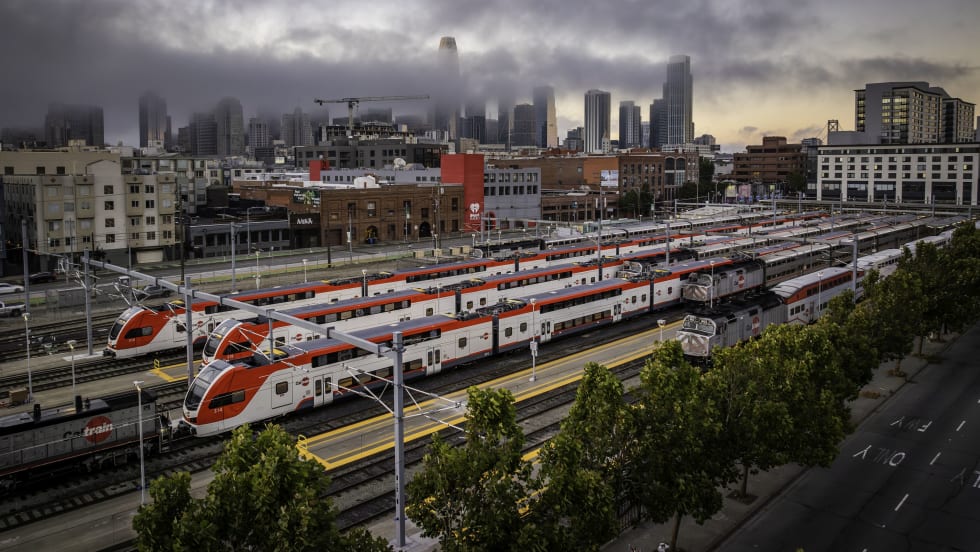
The Peninsula Corridor Joint Powers Board recently met for a budget workshop, during which staff outlined the significant service reductions Caltrain could be forced to make without new external funding.
In this edition, we cover recent appointments and announcements at Alstom, VIA Metropolitan Transit, Transdev US, and more, showcasing the individuals helping to shape the future of transportation.
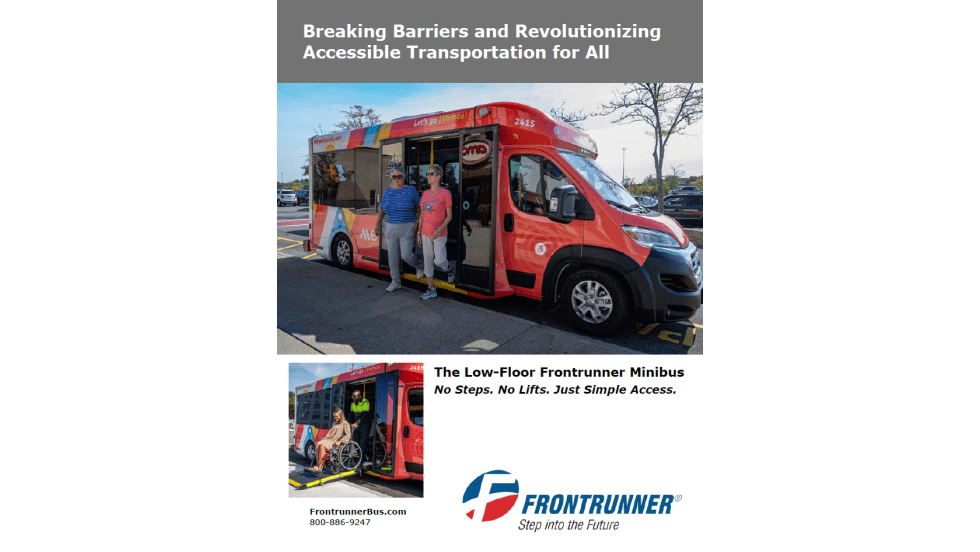
Accessible transit isn’t a feature—it’s a responsibility. This whitepaper explores how the Low-Floor Frontrunner is redefining mobility with a breakthrough design that removes barriers, empowers riders, and delivers measurable operational advantages for agencies. Discover why this next generation minibus is setting a new standard for inclusive transportation.
With major events and increased travel expected across the state this summer, the Administration is focused on making sure people have a reliable, affordable alternative to driving so we can reduce congestion, support daily commuters, and keep Massachusetts moving.
As the American Bus Association marks its 100th year, a new ABA Foundation report highlights the Marketplace’s role as a key revenue engine for the bus and group travel industry.
As motorcoaches navigate increasingly congested urban corridors filled with pedestrians, cyclists, scooters, and distracted drivers, safety leaders across the industry are confronting a growing challenge: visibility.