NFL Draft Delivers Big Ridership, Revenue Boost for Pittsburgh
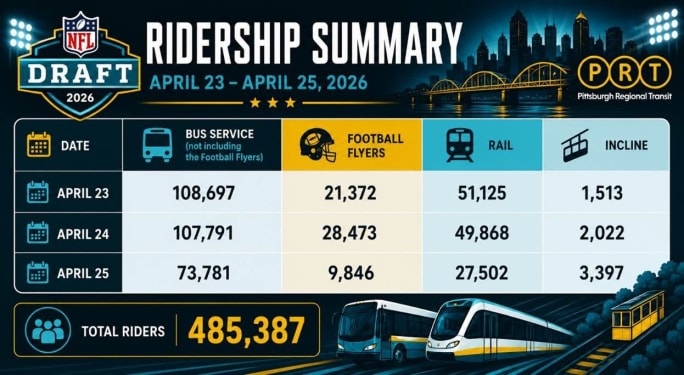
Over the three days, PRT recorded 485,000 rides, reflecting the extraordinary number of trips taken as people traveled throughout the region for Draft events, work, and daily life.
To meet the moment, PRT redeployed its services where they were needed most, said agency officials.
Credit:
PRT
3 min to read
Pittsburgh Regional Transit facilitated nearly half a million rides during the 2026 NFL Draft, significantly boosting local transit usage.
Between April 23 and April 25, PRT transportation options were pivotal for accessing Draft activities across Pittsburgh, including Point State Park and the North Shore.
The special Football Flyer routes alone serviced almost 60,000 riders, contributing to a 51% increase in ridership compared to typical periods.
*Summarized by AI
Pittsburgh Regional Transit (PRT) helped power one of the most successful major events in the region’s history, moving nearly half a million riders during the 2026 NFL Draft while generating more than $1.2 million in new revenue, according to the agency.
Delivering Draft Week Service
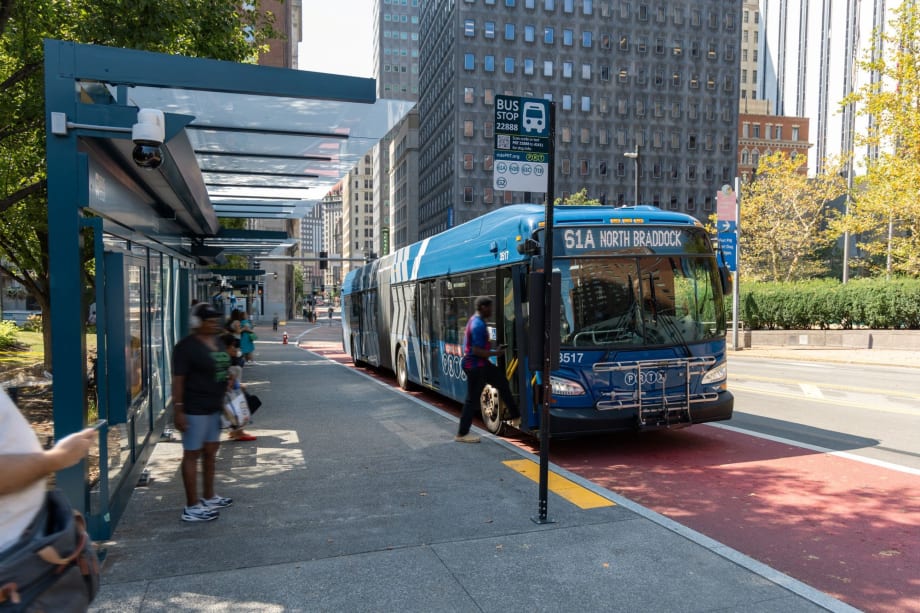
From April 23 through April 25, residents and visitors relied on PRT’s bus, light rail, and incline network to access Draft activities at Point State Park, the North Shore, and destinations across the city.
Ad Loading...
Over the three days, PRT recorded 485,000 rides, reflecting the extraordinary number of trips taken as people traveled throughout the region for Draft events, work, and daily life.
The three-day total represented a 51% increase compared to the average ridership for two typical weekdays and one Saturday in March, the most recent period for which PRT has complete ridership data.
PRT’s four special Football Flyer routes alone carried nearly 60,000 riders, offering direct connections from park-and-ride locations across Allegheny County to the heart of the Draft.
With support from the Pittsburgh Organizing Committee and The Pittsburgh Foundation, all Football Flyer service was fare-free, helping to remove barriers and making it easy for people across the region to participate.
“PRT helped make the Draft accessible to everyone,” said Allegheny County Executive Sara Innamorato. “This was a moment for Pittsburgh to shine, and transit made it possible for hundreds of thousands of people to be part of it while also delivering real economic value for our region.”
Ad Loading...
From April 23 through April 25, residents and visitors relied on PRT’s bus, light rail, and incline network to access Draft activities at Point State Park, the North Shore, and destinations across the city.
Credit:
PRT
How PRT Deployed Service
To meet the moment, PRT redeployed its services where they were needed most, said agency officials.
Light rail operated every 15 minutes (every 7 1/2 minutes in Downtown Pittsburgh and the North Shore), and both light rail and the Monongahela Incline were fare-free through a partnership, helping create a seamless, high-capacity network. Local bus routes operated on Saturday schedules yet continued to serve riders across the county, ensuring that daily life didn’t stop even as the city hosted the global event.
At the same time, the Draft generated more than $1.2 million in new revenue for PRT through advertising, sponsorships, and strategic partnerships, reinforcing the value of public transit — “not just as infrastructure, but as an economic engine,” said PRT officials.
Key contributions included approximately $494,000 in advertising sales and major investments from regional partners. VisitPITTSBURGH contributed $350,000 to support expanded bus service, while Sheetz, the Pittsburgh Organizing Committee, and The Pittsburgh Foundation funded fare-free access across key parts of the system.
“This was Pittsburgh at its best: public agencies, private partners, and community leaders coming together to deliver something big,” said PRT CEO Katharine Kelleman. “Transit was at the center of that success. We connected people to opportunity and showed what this region can do when we invest in a system that works.”
Quick Answers
Pittsburgh Regional Transit supported the 2026 NFL Draft by providing transport services, moving nearly half a million riders via its bus, light rail, and incline network.
During the NFL Draft, PRT recorded 485,000 rides over three days, representing a 51% increase compared to average ridership for two weekdays and one Saturday in March.
PRT generated more than $1.2 million in new revenue during the 2026 NFL Draft.
The Football Flyer routes are special bus routes provided by PRT during events like the NFL Draft to offer direct connections from park-and-ride locations to event sites.
PRT provided access to Draft activities at Point State Park, the North Shore, and various destinations across the city.
Officials said the ridership gains recorded in February, March, and April signal renewed public confidence in transit and reinforce AC Transit’s vital role in connecting East Bay residents with jobs, schools, healthcare, shopping, and recreational destinations.
A new study found commuters in several major U.S. cities could save hundreds of dollars each month by taking public transit instead of driving, with Los Angeles ranking as the nation’s most expensive city for car commuters.
HDR’s transit program management lead discusses the challenges of overseeing large capital projects, adapting to cost and supply chain pressures, and the capabilities agencies need to build for the future.
Garo Hovnanian explores how agencies can better navigate competing priorities, strengthen decision-making, and prepare for a future shaped by electrification and emerging mobility.
The plan includes investments in cleaner vehicles and upgraded stations, NJT LiveView to provide real-time GPS tracking of train and light rail service, enhanced safety initiatives through a new Real Time Crime Center, and the debut of a redesigned NJ TRANSIT mobile app.
ABQ RIDE Forward is the first transit system overhaul in more than 25 years. This latest phase marks 15% completion of the 16-phase rollout, which will continue over the next several years.
During the meeting, the board approved a resolution invalidating a previously amended contract and authorized Board Chair Ann Duplessis to negotiate a separation agreement with CEO Lona Edwards Hankins.
The Pilot Program for TOD Planning helps support FTA’s mission of improving America’s communities through public transportation by providing funding to local communities to integrate land use and transportation planning with a new fixed-guideway or core-capacity transit capital investment.