




Keep Reading: Chicago's Metra Upgrades 3 Electric District Stations
Chicago's Metra Unveils 2026 Budget of $1.1 Billion, Includes First Fare Increase Since 2018
The agency reports no planned service cuts as it seeks public input and prepares for looming funding gaps after COVID relief ends.
October 13, 2025
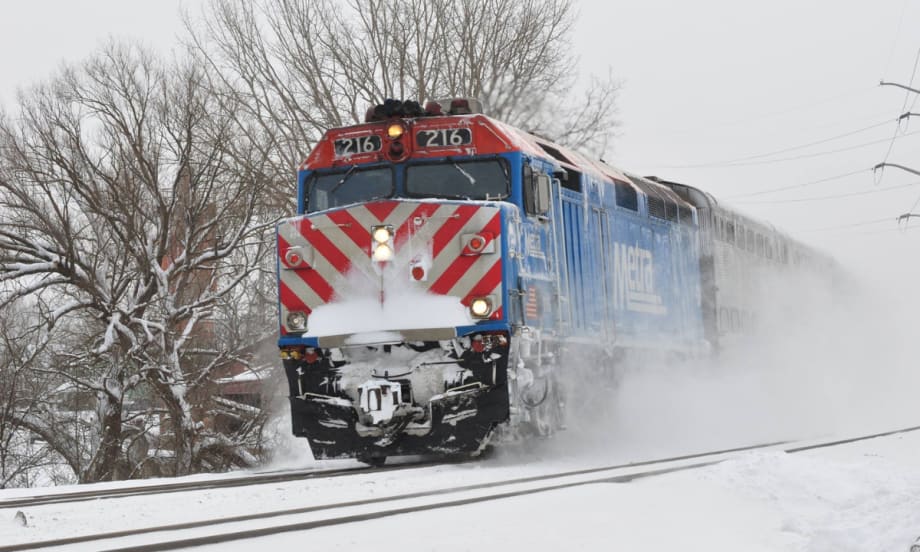
Like CTA and Pace, Metra initially expected to face a larger funding shortfall next year, driven by the expected exhaustion of federal COVID-relief funds.
Photo: Metra
2 min to read
Metra recently unveiled a $1.1 billion budget for 2026 that includes an RTA-mandated fare increase and other measures to cover a projected $68 million shortfall. According to an agency release, no service cuts will be needed.
It also proposed a $575.3 million capital plan that continues significant investment in bridges, stations, and new and rehabilitated rolling stock. The plans will be the subject of public feedback, including hearings, before the Metra Board of Directors votes in November.
Like CTA and Pace, Metra initially expected to face a larger funding shortfall next year, driven by the expected exhaustion of federal COVID-relief funds.
The agencies have been using the relief funds to cover drops in fare revenue due to lower post-pandemic ridership. Due to various factors, Metra now expects to get through most of 2026 before those relief funds are fully spent. The agency expects to be able to cover the smaller shortfall with prioritized hiring, delayed discretionary spending, delayed service expansions, better operating results, and higher sales taxes.
Metra Fares Increased to Address Deficits
However, this is not the case for the coming years. Metra expects a $276.3 million shortfall in 2027 and a $304.8 million shortfall in 2028. According to the agency, severe service cuts and other actions will be needed unless the Legislature increases funding for public transportation in Illinois to replace the COVID-relief dollars.
The Regional Transportation Authority required Metra, CTA, and Pace to raise fares by at least 10% next year to help address deficits resulting from the exhaustion of federal COVID-relief funds. It would be the first across-the-board fare increase at Metra since 2018.
Due to the need to round fares to the nearest quarter to assist onboard fare collection, Metra fares would increase 13% to 15% depending on the fare product and the number of zones travelled. A comparison between all current and proposed fares includes:
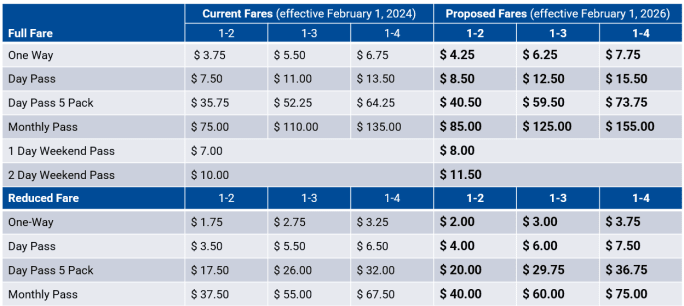
For instance, the cost of a One-Way Ticket would increase to $4.25 from $3.75 for Zone1-2, to $6.25 from $5.50 for Zone 1-3, and to $7.75 from $6.75 for zone 1-4.
Source: Metra
How Metra is Planning for the Future
The proposed operating budget of $1.1 billion is about $18 million, or 1.7%, lower than the 2025 budget. The decrease is largely driven by operating efficiencies and other reductions offset by expected inflationary, contractual, and market increases.
The budget is funded by system-generated revenue of $325 million, including $207.8 million in fares. It is also funded by $635.9 million in regional sales tax receipts and Metra's remaining $206.1 million in federal COVID-relief funding. Metra is proposing to set aside $60 million in fare revenue for capital needs, including for a critical program to replace or rehab hundreds of aging bridges.
Public hearings on the budget will be held throughout the region on Nov. 5 and 6, from 4 p.m. to 6 p.m.
More Management
New York MTA Launches Historic $1.9B Signal, Track Modernization Project
Funded in part by congestion pricing revenue, the project will replace nearly century-old signals along the A and C lines in Brooklyn and Queens.
Read More →
Brian Dickson on Building Stronger, More Resilient Transportation Organizations
Bus Business Consultants Founder Brian Dickson discusses the leadership principles, operational discipline, and strategic planning that separate transportation companies positioned for long-term success from those stuck in survival mode.
Read More →
LA Metro Breaks Ground on Vermont BRT Project
The 12.4-mile corridor is projected to serve 66,200 daily riders, reduce travel times by up to 24%, and create the nation's busiest bus rapid transit corridor.
Read More →
Building Stronger Leaders, More Resilient Transit Teams
Dr. Carol Parker Walsh discusses leadership development, employee retention, workplace culture, and preparing transit’s workforce for AI and automation.
Read More →
Roman Cornell on ABC Companies’ Evolution and the Future of Passenger Transportation
The company’s CEO discusses carrying forward a third-generation family legacy, ABC’s continued evolution in passenger transportation, support for increasingly complex fleets, and how technology and continued investment could help operators improve uptime.
Read More →
CATS Launches West Charlotte Microtransit Zone, Expands Transit Services
The new microtransit zone connects residents to key destinations as Charlotte Area Transit System rolls out the first phase of its 2055 Transit System Plan.
Read More →
VIA Bus Ridership Grows 10.1% Through August 2026
San Antonio's VIA Metropolitan Transit reported the highest bus ridership growth among major Texas transit systems. Federal Transit Administration data ranked it second among the nation's 50 largest transit systems.
Read More →
CSA Group Releases Climate Resilience Standard for Transit, Passenger Rail
Developed with support from the Standards Council of Canada, CSA D700 guides assessing climate-related risks and planning adaptation measures for transit and passenger rail systems.
Read More →
ETA CEO John Maglio on Transit Technology, Innovation, and Building Agency Trust
ETA founder and CEO John Maglio explores the evolution of transit technology, the importance of reliable systems, and how stronger partnerships can help agencies improve operations and the passenger experience.
Read More →
COTA Launches First Customer Experience Action Plan to Improve Transit Service
The new plan outlines improvements to service reliability, accessibility, communication, and the overall rider experience across Central Ohio's transit system.
Read More →