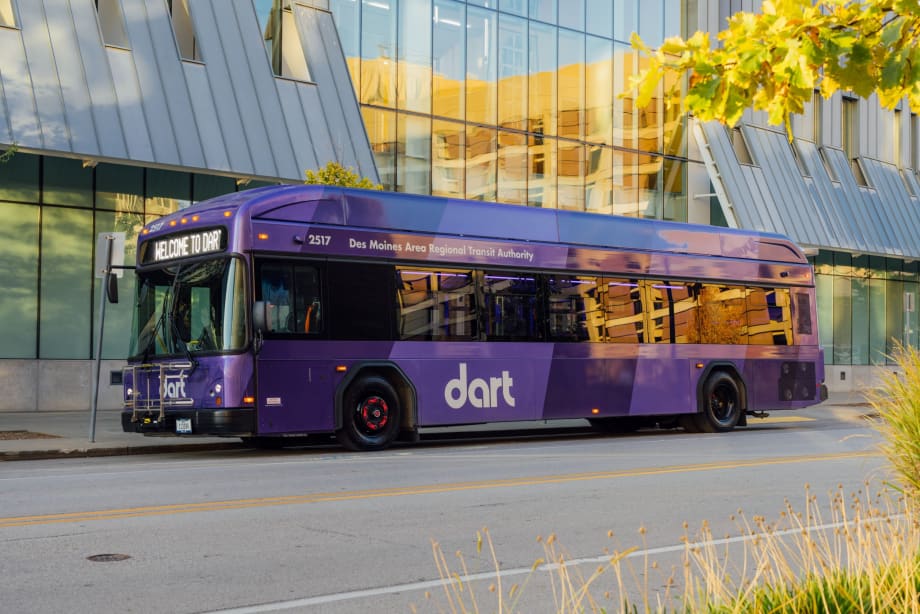
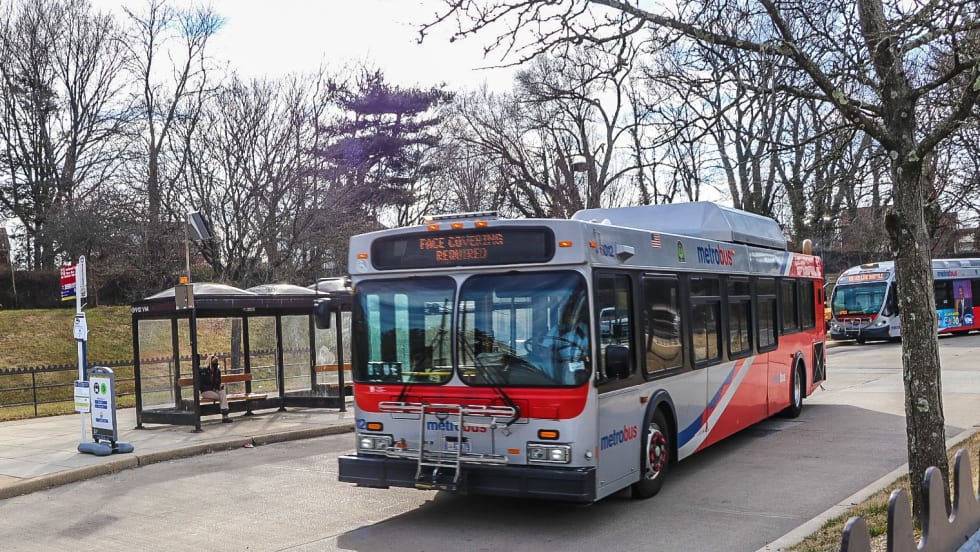
The new network reflects extensive input from riders and the community through Reimagine DART on what matters most in public transit — and those priorities are reflected in the changes ahead.
The new network reflects extensive input from riders and the community through Reimagine DART on what matters most in public transit — and those priorities are reflected in the changes ahead.
Credit:
DART
3 min to read
Iowa DART is preparing to launch a new bus network in June.
The network changes are based on comprehensive feedback from riders and the community.
Reimagine DART aimed to prioritize what is most important in public transit for users.
*Summarized by AI
Iowa’s Des Moines Area Regional Transit Authority (DART) is set to launch its new bus network on June 14.
Officials said the team is set to help riders learn the new routes and plan their trips through one-on-one trip planning support at 12 open houses in May and June.
Ad Loading...
“We know this is a big change for the thousands of riders who depend on us to get to work, school, and essential services,” said DART’s Chief Administrative and Strategy Officer Erin Hockman. “With June 14 just around the corner, DART staff is looking forward to helping riders learn the new routes and ensure they have support and resources to make this transition as smooth as possible.”
What’s New
The new network reflects extensive input from riders and the community through Reimagine DART on what matters most in public transit — and those priorities are reflected in the changes ahead.
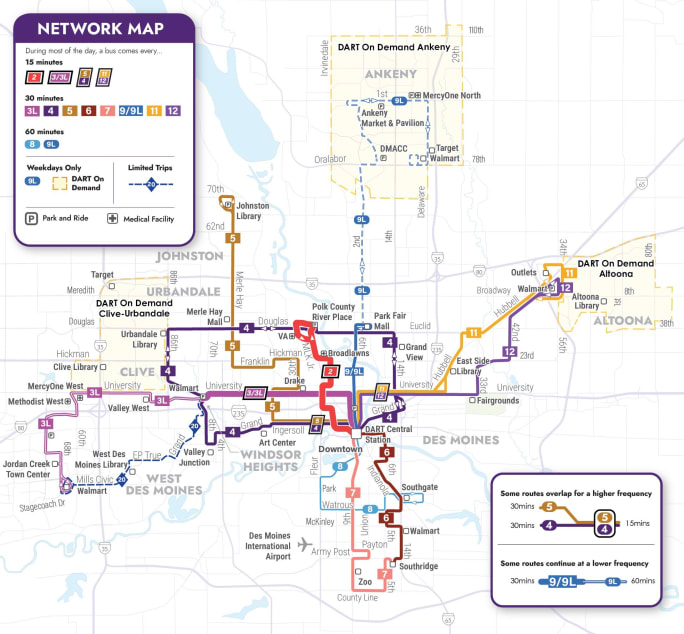
On June 14, all current bus routes will be replaced by 11 routes, most of which will run more often all day, seven days a week, along the busiest streets in the Des Moines metro.
Four corridors will have a 15-minute bus service.
Bus stops will be spaced farther apart – about every three to four blocks – to provide faster, more reliable service.
Transfers at DART Central Station will be timed to speed up travel for many trips.
Service hours will also be reduced by 2 hours on weekdays and 1 hour on Saturdays to align total service hours with what member communities can afford and limit property tax growth.
Ad Loading...
New DART On Demand zones will launch in late September, increasing transit access in three suburban areas.
The changes to the network will mean that:
The average Greater Des Moines resident will be able to reach 3,700 more jobs within 45 minutes on weekdays using public transit, a 15% increase. They will be able to reach 13,200 more jobs on Sundays, an 89% increase.
About 22,000 more residents will have access to public transit, a 5% increase.
The new network was shaped by input from elected leaders, riders, and residents as part of Reimagine DART.
Credit:
DART
Providing Rider Support
“Our team is hard at work preparing for the new network – from operators driving every route to customer service increasing staffing to accept more calls,” said Luis Montoya, DART chief operating and planning officer. “We’re focused on making sure everything is ready to roll on day one and that both our team and riders feel confident with the new system.”
Over the next several weeks, riders and the public can expect these additional updates:
Ad Loading...
DART is replacing all bus stop signs throughout its network. New bus signs will provide clearer information about each bus route. Stops being removed will be marked.
A new rideDART.com website will launch by early June, making information easier to access and use on mobile devices.
All bus routes will be free to ride from June 14 to 30, allowing riders to practice their trips as they adjust to the new network.
More About the New Network
The new network was shaped by input from elected leaders, riders, and residents as part of Reimagine DART.
Throughout 2025, more than 2,300 survey responses informed the priorities for the new bus network. Most survey respondents were DART riders who use the system several days a week, according to the agency.
Quick Answers
The purpose of the Iowa DART network launch is to implement changes that reflect the priorities and inputs of riders and the community gathered through Reimagine DART.
The new bus network is expected to launch in June.
Input for the new DART network changes was gathered extensively from riders and the community.
Reimagine DART is a program through which input was collected from the community to understand what matters most in public transit.
The main priorities considered in the new DART network include those that matter most to the community and riders, as identified through Reimagine DART.
The visit is part of the SF Fed's ongoing engagement with major employers and industries across Southern California and, more broadly, the western U.S. to better understand regional economic conditions and business outlooks.
Advances in data and analytics are giving transit agencies new opportunities to refine maintenance practices, improve efficiency and make more informed decisions about asset performance.
Today’s riders—and the communities you serve—expect more from public transit. While ADA compliance is required, leading transit agencies know that true accessibility also means delivering dignity, efficiency, and a better rider experience. This whitepaper reveals why forward thinking agencies nationwide choose the Low Floor Frontrunner as their first choice for ADA compliant vehicles—setting a new standard with passenger first design, faster boarding, improved safety, and unmatched operational performance.
In Part 2 of a two-part conversation, AC Transit’s director of maintenance joins co-hosts Alex Roman and Mark Hollenbeck to discuss his maintenance team’s work with various types of vehicle, training, augmented reality, and more.
Under this extension, Keolis will continue to manage and operate fixed-route bus service across the East Valley, serving communities including Tempe, Mesa, Chandler, Scottsdale, the town of Gilbert, parts of Phoenix, and the Gila River Indian Community.
While recognizing regional economic constraints and continuing to improve service, the budget increases the jurisdictional subsidy to less than 1.8%, significantly below the inflation rate and the 3% regional target, said agency officials.
Coalition leaders outline priorities for preserving bus funding, maintaining competitive grants, and ensuring flexibility for transit agencies nationwide.
In the coming months, the parties will develop an interlocal agreement for the city’s annexation into Community Transit’s district. The proposal will be considered by the Everett City Council and the Community Transit board this fall, said officials.