



Audit Finds Regional Coordination Across California's East Bay Transit Agencies
The State Auditor further concluded that while collaboration among transit agencies is functioning, the Bay Area’s public transportation systems face mounting structural fiscal pressures that threaten future service levels if sustainable funding solutions are not secured.

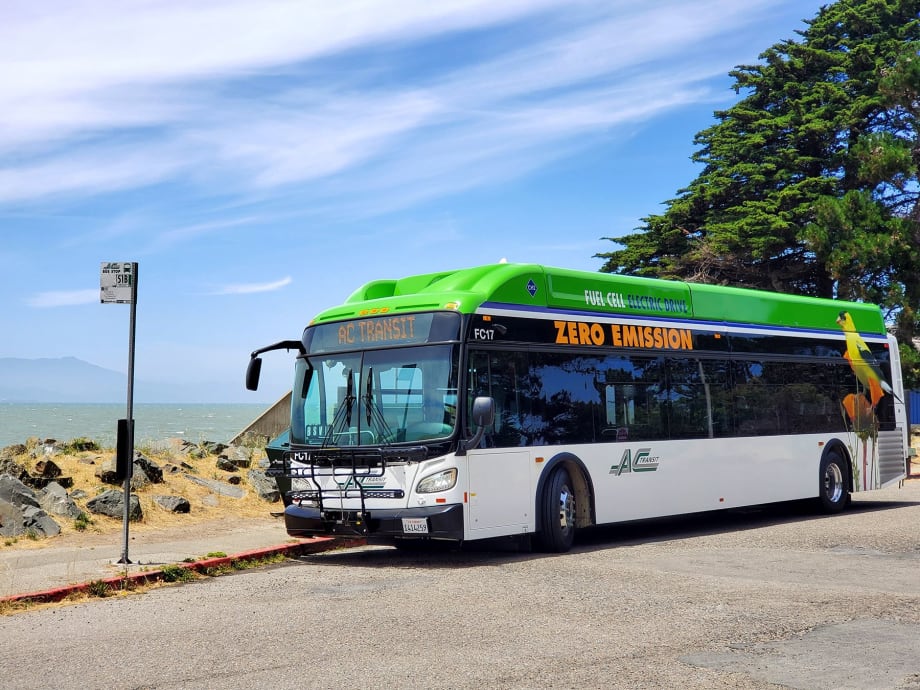
As part of the review, California’s State Auditor examined how well AC Transit, County Connection, Wheels, Tri Delta Transit, Union City Transit, and WestCAT work together, the financial pressures they face, and whether consolidating transit agencies would improve efficiency or reduce costs.
CTE/AC Transit
- The State Auditor has found that collaboration among transit agencies in California's East Bay region is operational.
- Bay Area public transportation systems are experiencing increasing structural fiscal pressures.
- Without sustainable funding solutions, future service levels of the transit systems are at risk.
*Summarized by AI
Oakland, California’s Alameda-Contra Costa Transit District (AC Transit) highlighted the findings of a newly completed state audit examining six East Bay transit agencies and the Metropolitan Transportation Commission (MTC), which concluded the agencies have established regional coordination efforts and outlined recommendations for additional collaboration.
The State Auditor further concluded that while collaboration among transit agencies is functioning, the Bay Area’s public transportation systems face mounting structural fiscal pressures that threaten future service levels if sustainable funding solutions are not secured.
The State Audit’s Findings
Commissioned by the Joint Legislative Audit Committee after a formal April 2025 request from State Senator Aisha Wahab, the audit was launched in response to concerns that East Bay transit systems were too fragmented, duplicated some services, created challenges for riders transferring between agencies, and faced long-term financial instability.
As part of the review, California’s State Auditor examined how well AC Transit, County Connection, Wheels, Tri Delta Transit, Union City Transit, and WestCAT work together, the financial pressures they face, and whether consolidating transit agencies would improve efficiency or reduce costs.
According to AC Transit officials, the findings make one point clear: East Bay transit agencies are already coordinating in meaningful ways. The greater challenge is not a lack of collaboration but the need for long-term, sustainable funding to ensure future service.
Among the audit’s most significant findings:
- Transit coordination across the East Bay is already strong: Auditors took 12 real-world commute trips that everyday riders could reasonably make across East Bay service areas, covering about 25% of routes that cross agency boundaries. They conclude that riders did not face significant barriers or major problems transferring between agencies.
- MTC regional integration initiatives continue to lag behind schedule: Although MTC has launched multiple initiatives intended to improve the rider experience across the Bay Area, auditors found that none of the nine reviewed initiatives were completed within their preliminary timelines. The finding raises concerns about the pace of regional transit modernization efforts.
- Five of the six transit agencies face serious fiscal risks: Apart from Tri Delta Transit, the selected East Bay transit agencies have adequate short-term financial reserves. However, all but Union City Transit are at risk of depleting those reserves without new funding — some as soon as fiscal year 2026–27. As a result, agencies may be forced to reduce service levels, further impacting mobility, economic access, and regional connectivity.
- Zero-emission bus mandates present major financial hurdles: Transit agencies reported significant concerns about the cost of purchasing and deploying zero-emission buses required under California mandates. The report identifies the transition as a growing operational and fiscal challenge for public transit providers.
- Transit agency consolidation is unlikely to solve financial problems: Auditors examined whether combining agencies could improve financial sustainability and found that consolidation alone would not resolve structural deficits. Combined agencies would still face negative unrestricted net positions and long-term financial pressures.
- Legal and labor-related barriers could complicate consolidation efforts: The report notes that federal protections governing private contractors, along with differing labor agreements, would pose substantial challenges to consolidation. Additionally, standardizing wages and benefits across merged agencies could significantly increase costs, as AC Transit currently has substantially higher labor costs than neighboring operators.
More Audit Takeaways
The audit presents a balanced view of how East Bay transit agencies are working together effectively for riders, but the region’s transit network remains financially vulnerable, AC Transit officials said.
The report also makes clear that consolidation alone will not solve the problem. Long-term sustainability will depend on “stable funding, careful management of rising operating costs, and the ability to meet ambitious state climate goals while navigating real fiscal constraints.”
Quick Answers
The State Auditor concluded that collaboration among transit agencies in California's East Bay is functioning.
*Summarized by AI
More Management
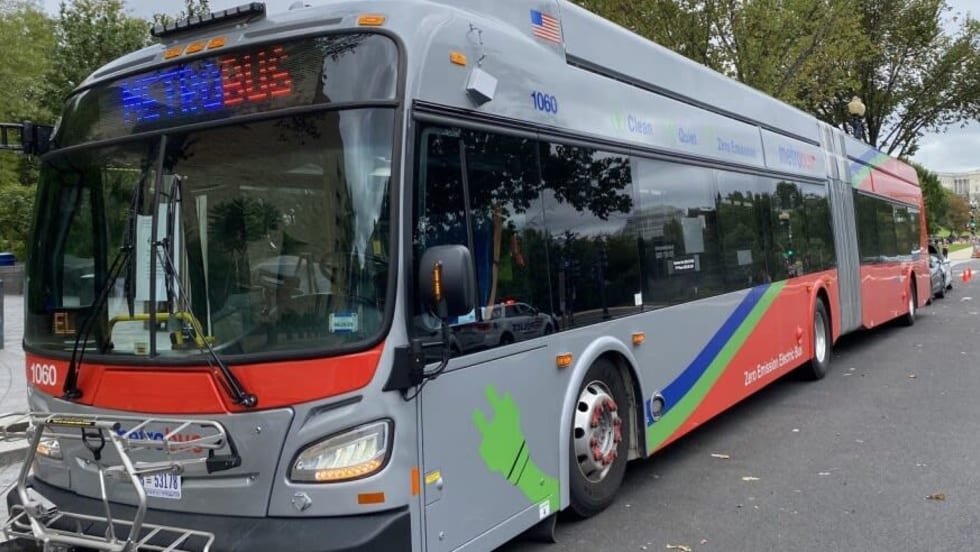
WMATA Debuts 'Fares Pay for Service' Awareness Campaign
The campaign was highlighted during a media event at the Paul S. Sarbanes Transit Center in Silver Spring, where WMATA’s GM/CEO Randy Clarke joined Metro Transit Police officers, WMATA management team, board members, and staff to expand fare enforcement and customer education efforts on Metro Bus routes throughout the region.
Read More →
Managing Complexity: HDR’s Brian Buchanan on Delivering Major Transit Programs
HDR’s transit program management lead discusses the challenges of overseeing large capital projects, adapting to cost and supply chain pressures, and the capabilities agencies need to build for the future.
Read More →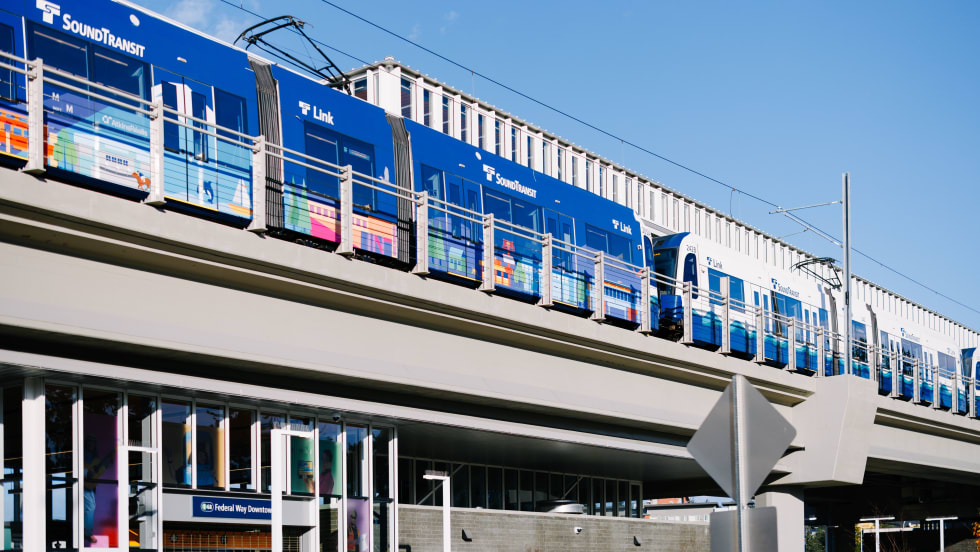
Seattle’s Sound Transit Adopts Updated ST3 System Plan
The updated system plan incorporates cost savings across the agency, including new revenue sources and financial policies, to set the agency on a sustainable path for the future.
Read More →
Biz Briefs: Foothill Gold Line Award, Matawan Contract, and More
From strategic partnerships to acquisitions and service expansions, the industry continues to evolve at a rapid pace. Find out all the latest here.
Read More →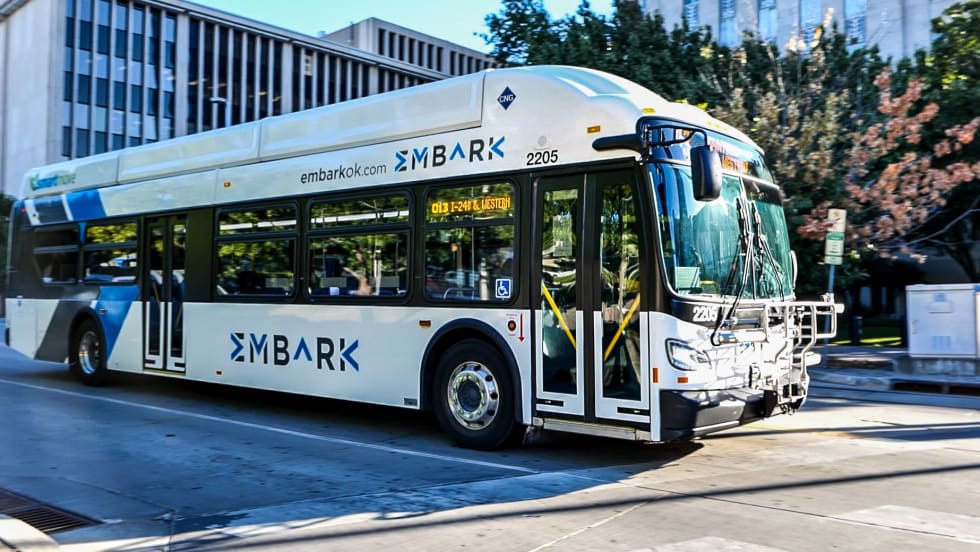
Inside Look: EMBARK Expands Fare-Free Transit Program Through New Public-Private Partnership
The OKC transit agency says sponsorship helps subsidize the Third Friday Free initiative while reducing barriers for first-time riders and boosting ridership across buses, streetcars, and river cruises.
Read More →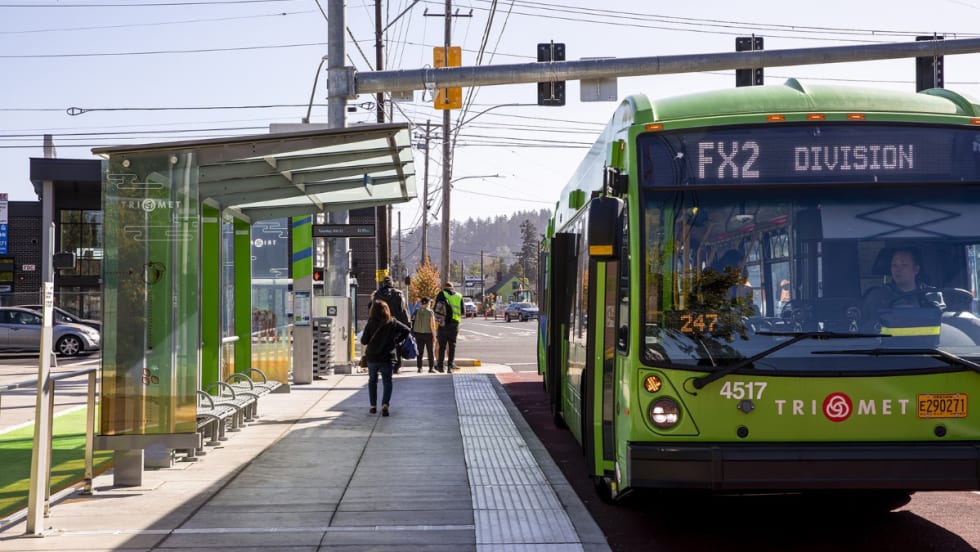
Oregon's TriMet Adopts Major Budget Cuts to Address Financial Shortfall
The board adopted the agency’s fiscal year 2027 budget, approving approximately $64.5 million in spending reductions, including about $53 million in administrative cuts and roughly $11 million in service reductions.
Read More →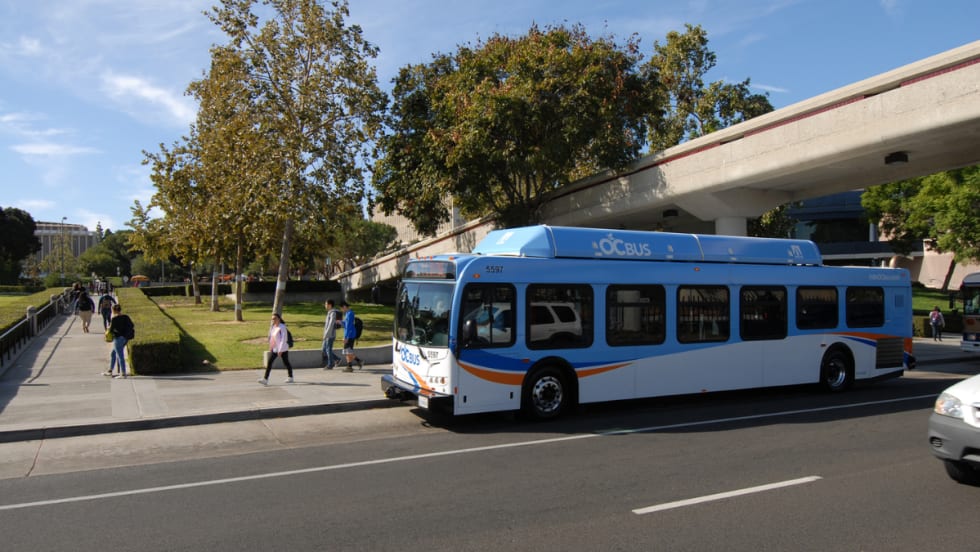
OCTA Sees Growing Adoption of Wave Fare Payment System
Since launching in October 2025, the Wave system has steadily replaced previous fare media with faster, more flexible payment options designed to streamline boarding, improve reliability, and help riders more easily access fare discounts and cost-saving benefits, said OCTA
Read More →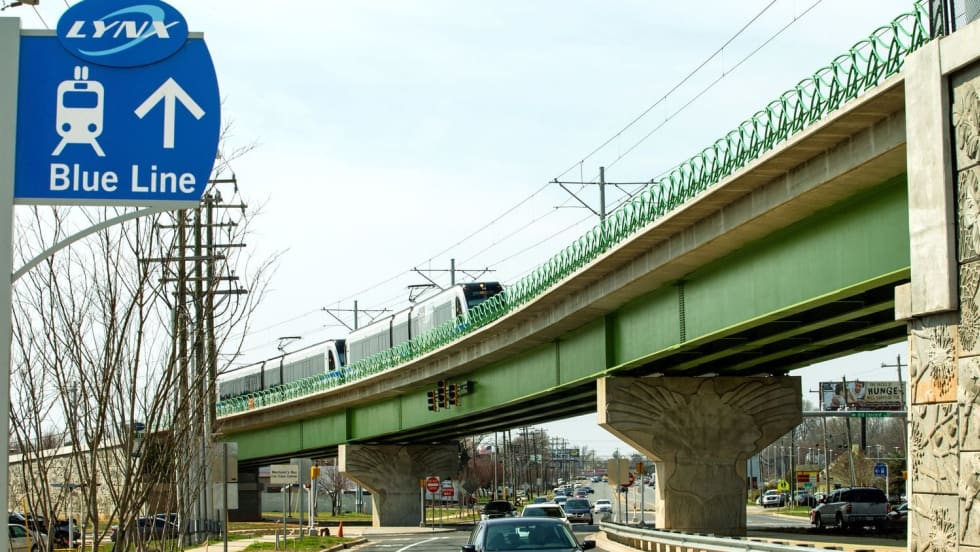
North Carolina's Metropolitan Transit Commission Concludes Decades of Leadership
To commemorate the occasion, current members of the MTC were presented with a custom painting of the Charlotte Transportation Center in Uptown.
Read More →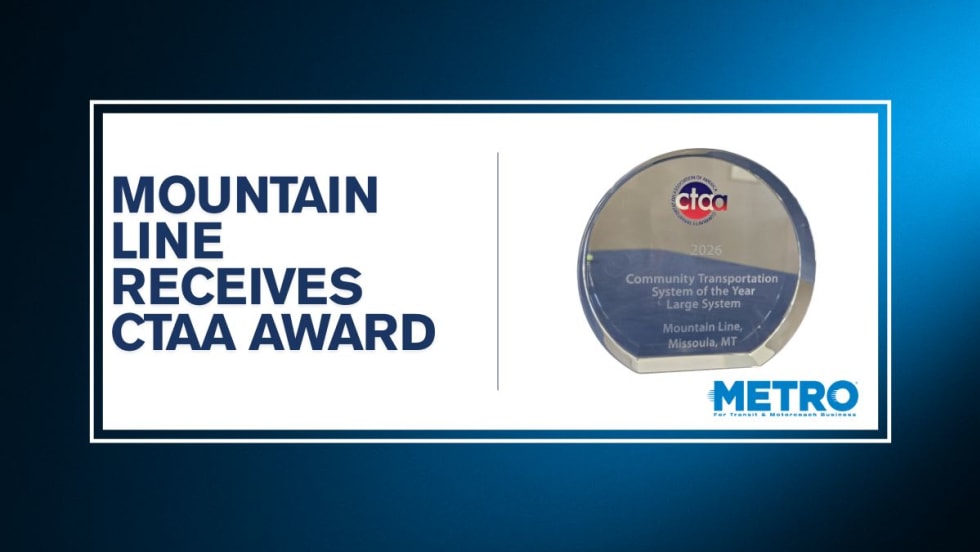
Montana's Mountain Line Named Nation’s Best Transit System by CTAA
The award was presented to Mountain Line representatives at the CTAA Expo in mid-May, with bus operator Bryan Ursery, who has worked at Mountain Line for more than two decades, accepting the award on the agency's behalf.
Read More →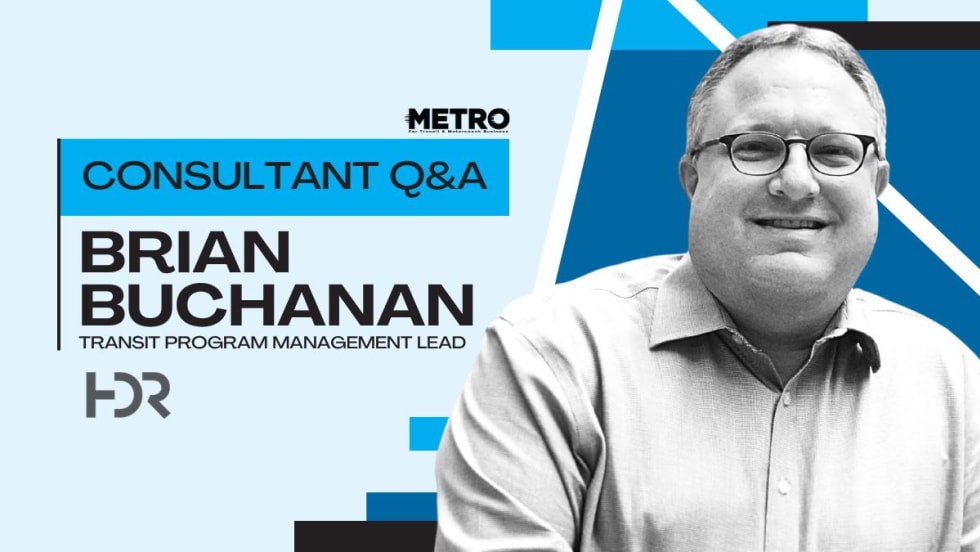
The Evolving Role of Program Management in Transit Delivery
Brian Buchanan, HDR’s transit program management lead, discusses how agencies can strengthen governance, anticipate risk and deliver large-scale projects more effectively.
Read More →